
To celebrate the 15th anniversary of Animation Studio MAPPA, Manabu Otsuka, MAPPA’s President & CEO, and Kaori Makita, animation director behind titles such as Hell’s Paradise and Kakegurui Twin, visited the German convention AnimagiC.
Among their many activities during the event, which included a screening of the acclaimed Chainsaw Man – The Movie: Reze Arc and an exclusive panel with fans reflecting on MAPPA’s trajectory, Otsuka-san and Makita-san sat down with us to talk about their thoughts on the anime industry, the studio’s growth, and how they reach out to international audiences.

Portions of this interview have been edited for length and clarity. This interview was conducted with the assistance of an interpreter.
Q: First of all, congratulations on MAPPA’s 15th anniversary. Looking back on these 15 years, which moment would you consider the turning point in the studio’s history?
Otsuka-san: Our journey has been shaped by so many turning points that it’s genuinely hard to focus on a single one. An important turning point was certainly in 2014 with Terror in Resonance. Then, Yuri!!! on Ice came in 2016, which really was another major turning point for us.
Titles that generated a lot of attention followed after that, like Jujutsu Kaisen and Chainsaw Man. As we produced so many titles along the way, honestly, I don’t think our history can be boiled down to a single turning point.
Q: We’re curious about the production side: from the moment a project is greenlit to the day the first episode airs, how long does the production of a TV anime typically take at MAPPA?
Otsuka-san: This has changed enormously. In the very beginning, when we were still a young studio, our timeframe was maybe two years from planning to the TV broadcast. We had correspondingly smaller budgets and a different way of working under the conditions of the time. Since then, the timeframes have grown considerably: today, at least three years of production time is the standard. Big titles now come with a completely different budget than before, and for the bigger titles, five years or more—counting from the planning stage—is not unusual at all. That’s a very big difference compared to the past.
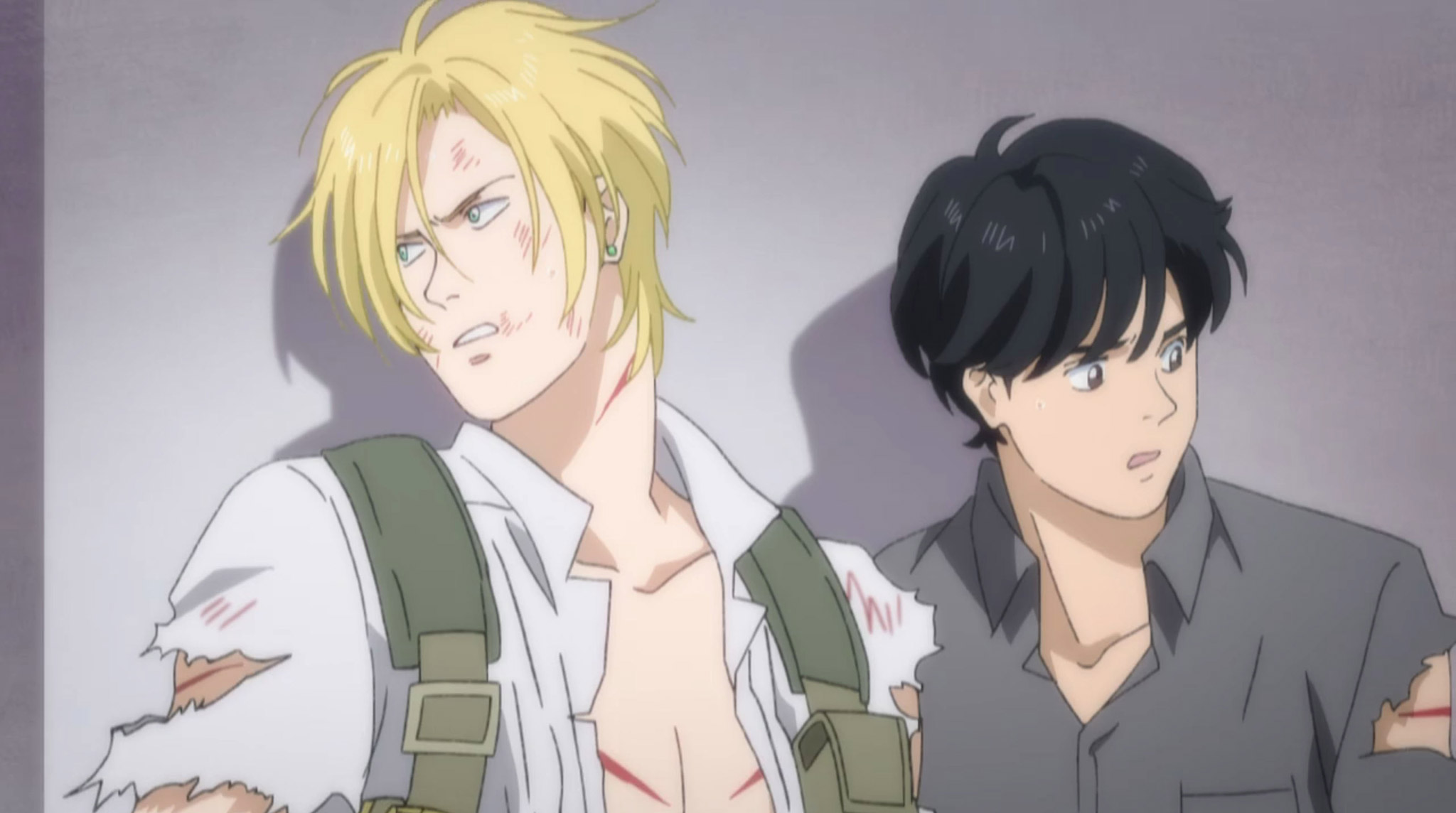
Q: Otsuka-san, you oversaw the production of Yuri!!! on Ice and Banana Fish, among others. Is there anything you miss about hands-on production work?
Otsuka-san: Yes, ever since I moved into company management, the space I have to devote myself to a single work has narrowed considerably. Pouring real time and my own resources into a single title the way I used to and then delivering it to the audience—I do sometimes miss that. Looking back on it today, I remember it very fondly: it was a time that was genuinely a lot of fun.
Q: A similar question for you, Makita-san: Is there anything you miss about production work from your earlier days?
Makita-san: It’s much the same for me. In my early days at MAPPA I worked on titles like Terror in Resonance, Punch Line, and other works I still look back on fondly. I worked on the production and planning side as a settei seisaku [Design Production Coordinator] under many different directors. In that role, you follow every stage of a work right at the director’s side, and you get to see and experience how they think, how they work, and what approach they take.
Especially now that I’ve directed myself, I’d love to experience that once more: to watch, from right beside various directors, how they bring their works to life. Those insights and the experience of working with so many different directors were especially valuable to me. But since I’m an episode/unit director myself now, I can’t really be involved as a Design Production Coordinator anymore [laughs].
Q: Many studios are known for focusing on specific genres—MAPPA, on the other hand, has covered sports anime, historically inspired stories, and comedy. What is the most important thing for you when planning a new project?
Otsuka-san: There are two sides that matter to us. First, the audience side: as makers and deliverers, we don’t want to impose our own preferences or to focus on specific genres. We don’t have just one target audience—we want all kinds of people, across different eras, to be able to enjoy MAPPA’s titles: across generations, walks of life, and parts of society. To accomplish that, it’s important that we stay flexible in planning our works, so we can speak to everyone, whatever their background.
Then there’s the producing side: the creators and everyone who makes works with us. We don’t want to force a style on them either, saying “MAPPA is like this, and this is what we produce.” We want each person to be able to bring their own creativity to its fullest, and as a company we want to always keep a certain latitude to meet them where they are. That space—walking that path together with them—is what we want to offer.

Q: With Chainsaw Man, MAPPA changed its usual approach to financing anime and took full responsibility for the outcome. Looking back now, what did that experiment teach you about how anime could be made in the future?
Otsuka-san: What we’re constantly thinking about is creating and distributing: the creative and the business sides. Both are extremely important. Under the conventional approach, our job as a studio was essentially only the creative side; the distribution was left to production committees and the many other parties we entrusted it to. The endeavor we began with Chainsaw Man means creating it ourselves and distributing it to the audience ourselves.
The things our creators valued during production, everything so much effort went into—we can then preserve and convey those when distributing the work as well. Conversely, the people in production already know, while working, how the title is meant to be brought to the audience, and can align themselves with that. We wanted to greatly strengthen that mutual relationship between the two sides. It was a big challenge, but we truly learned a great deal from this endeavor.
Q: What concrete steps is MAPPA taking to ensure that young animators can build long careers at the studio?
Otsuka-san: The way things run for us is this: we finish one title, and almost simultaneously, the next projects are already getting underway—the whole process runs in a kind of repeating loop. In this way, it lets us keep bringing high-quality works to our audiences, which is something we feel is wonderful. On the other hand, a routine creeps in very quickly—an everyday quality, something that simply becomes standard. I don’t think that’s the best approach for enduring sustainably, or for keeping everyone involved satisfied in the long run. So the question is: how can we do this differently, more sustainably?
We have Makita-san here, who was in her late twenties when she started her first work as a director. I believe there are many stories and many works that are so good precisely because young people in their twenties are making them—because there is so much that only these young people can express. As a company, we truly place value on this, because I consider it very important: giving these young people the space to express themselves, to be active and creative within the work.

Q: What was the reasoning behind decentralizing production to studios outside Tokyo and how has it changed the dynamic within the company?
Otsuka-san: In the animation industry in particular, most animation studios and companies involved in animation production are concentrated in Tokyo: if you want to work in this industry, you basically have to go to Tokyo. Makita and I both come from the same region, from Shizuoka, and we both went to Tokyo. Only because of that were we able to meet at all, work together, and work in anime in the first place. Otherwise, we might never have entered this industry.
That is exactly the situation we wanted to resolve, or at least improve, for young people. There are surely many young people living in other regions who have great talent but have to give up their dreams because they can’t move to Tokyo. We wanted to give them an opportunity, which is why we built our studio in Tohoku, to bring young people together there.
In Osaka, in turn, many major gaming companies have a strong presence, and there are many young talents, including students, whom we also wanted to give the chance to get involved and work with us. This diversity of locations naturally brings challenges of its own, especially in terms of management and administration: if we grow in this way and expand into different regions, the administrative side has to expand its capabilities accordingly. That has changed a lot at our company; we’ve learned a great deal, and these are challenges we’re glad to take on.

Q: Now that anime is a global medium, does the international audience influence in any way which projects you choose or how they are made? And do you believe anime stays strongest when it’s made first and foremost for the Japanese audience?
Otsuka-san: The international audience definitely has a big influence on us. But what we’re very mindful of day to day is not letting ourselves be influenced by it too much, not bending too far toward it because that can mean giving up, of our own accord, the particular appeal Japanese anime has—the things that make us strong. So we look at it very level-headedly: what can we learn from the international market and put to use, and what has Japanese anime always carried within itself that must be preserved?
That balance is extremely important to us. We don’t simply take everything in; we examine and select carefully. At the same time, we also analyze and study our own strengths and search for the right equilibrium. That’s our way of thinking: uniting both as best we can, without losing ourselves in the process.
Makita-san: Speaking from the creators’ side: while actually making a work, we don’t specifically think about whether we’re producing it for Japan or for overseas, the nationality of the audience really is secondary. With an adaptation, for example, our focus is on realizing the source material so well that the fans of the original, and everyone willing to give it a chance, can enjoy and love the work as much as possible.
I think the reason anime is embraced worldwide today is exactly that: fans in Japan and fans abroad receive the works in the same way regardless of nationality. So when we work, we think less about which country something is meant for and more about how to bring out the very best in the work. And I’m certainly not the only one; I think that’s how many creators see it.
Q: There are now new tools such as AI, but also other digital tools. What are your thoughts on introducing AI into anime production? Where do you draw a firm line?
Otsuka-san: Whether it’s digital tools, 3D, or indeed AI—to me, all of these are ultimately tools, and nothing more than tools. Quality that moves people emotionally can only come from human beings—it has to be people who create it. That is my fundamental belief. So the real question is simply: which tools do you use, how, and to what appropriate degree? That’s something we’ll keep exploring continuously. Tools can at most serve to make workflows more efficient, but the creative process has to come from people.
Q: When you look at a finished MAPPA production, what detail tells you personally that the team did excellent work? Something a normal viewer would probably never notice.
Otsuka-san: In my position, I don’t really check the fine details of the process itself. Above all, I notice it after the work is completed, and I see the team’s mood at the wrap party. That is when we come together and raise a glass, and at that moment, I feel “Ah, everyone has truly given their all and that we were able to bring this work to a good finish.” You can simply feel it in the atmosphere of that celebration.
Makita-san: Otsuka-san phrased it really well! The atmosphere at the wrap party genuinely is one of the clearest indicators. From the perspective of the creative work itself, there are also those moments during checks: when, exactly at the moment it’s needed, exactly the right image, the right photography work, the right acting clicks into place, when everything comes together at just the right timing and the scene simply lands. It does happen that a cut is born where everyone across all departments, checking it, thinks: this turned out really good. Why you’re so certain of it is honestly a good question; objective criteria are hard to pin down. But when a cut comes into being where every single person did good work, you can feel the whole team’s spirits rise.
As for the things normal viewers rarely notice consciously, though some certainly do: spectacular action is extremely demanding, no question. But the unassuming everyday scenes in between are at least as difficult. When a truly effective, finely tuned everyday scene comes together in the animation, I think “Yes! We did good work there”. At first glance it looks plain, but it is incredibly hard to pull off.

Q: A more technical question for both of you: some genres, like sports anime or historical settings, require advanced knowledge. Does the studio consult any experts when working on this type of anime?
Otsuka-san: In this day and age, people from all kinds of countries scrutinize everything closely on social media: “Is that true? Is that accurate, or is there a mistake?” So that our audience doesn’t get caught up on such points and can simply enjoy the work, we very deliberately and actively seek supervision from experts.
Makita-san: I can only agree, and perhaps just add that as far back as Terror in Resonance, we worked a lot with experts in fields such as architecture, for instance on how buildings would actually collapse, and we consulted with specialists in police-related equipment and things like that. But due to the nature of the production process alone, one hundred percent simply isn’t possible: even if I myself became a complete expert in all these fields, many other people are still drawing the work. I may explain it, but the person who then has to draw that particular scene doesn’t have one hundred percent of that knowledge, and through their own drawing style it may end up looking a little different after all.
Anime is a collective production, and in collective work, perfection in these small details sometimes just can’t be fully achieved—even though we do, of course, strive for it.
Q: To wrap up: you’ve experienced AnimagiC this weekend and met European fans, German fans in particular. Has your view of the European community changed now that you’ve experienced the whole weekend? Do you notice any difference in the way European and Japanese fans engage with you?
Otsuka-san: I haven’t seen that much of Europe yet. I’ve been to events in France three or four times, but that alone isn’t enough to speak about Europe as a whole. But what I’ve noticed is that the fans here generally have a very deep understanding of the works and their stories, as well as a deep love and passion for them.
When I compare German fans with Japanese fans, they feel very similar: that politeness, that respectful reserve toward the works and toward the people who make them. I think it’s simply a very good match for Japanese fans and Japanese creators alike; the atmosphere feels very familiar. It has been a thoroughly positive impression, and I’m really glad I came. It’s an absolutely wonderful experience.
Makita-san: This is my very first time in Europe at all. In my mind, I had already pictured lots of cosplayers, lots of people who draw, and a great deal of passion behind it all—and that’s exactly how it turned out: you see it everywhere at this convention. What impressed me most is the respect and tact with which people here approach the medium, the works themselves, and the producing side as well. The fans are very committed to learning about anime and exploring it on their own. It has been a truly remarkable experience for me, and I appreciate all of it very much.

ⒸHajime Isayama, KODANSHA/”ATTACK ON TITAN” The Final Season Production Committee.
We want to extend our thanks to Otsuka-san and Makita-san for giving us their time for an interview during the convention. We appreciate their decision to celebrate MAPPA’s anniversary with overseas audiences at AnimagiC.
If you have the opportunity, don’t miss the ongoing “MAPPA EXPO 15th Anniversary” that is running at the YURAKUCHO MUSEUM in Tokyo from September 16 until December 7, 2026.


Join the discussion
Comments are linked to your Anime Corner account and published after moderation.
Sign in to comment
Use your Anime Corner Portal account across all Anime Corner services.