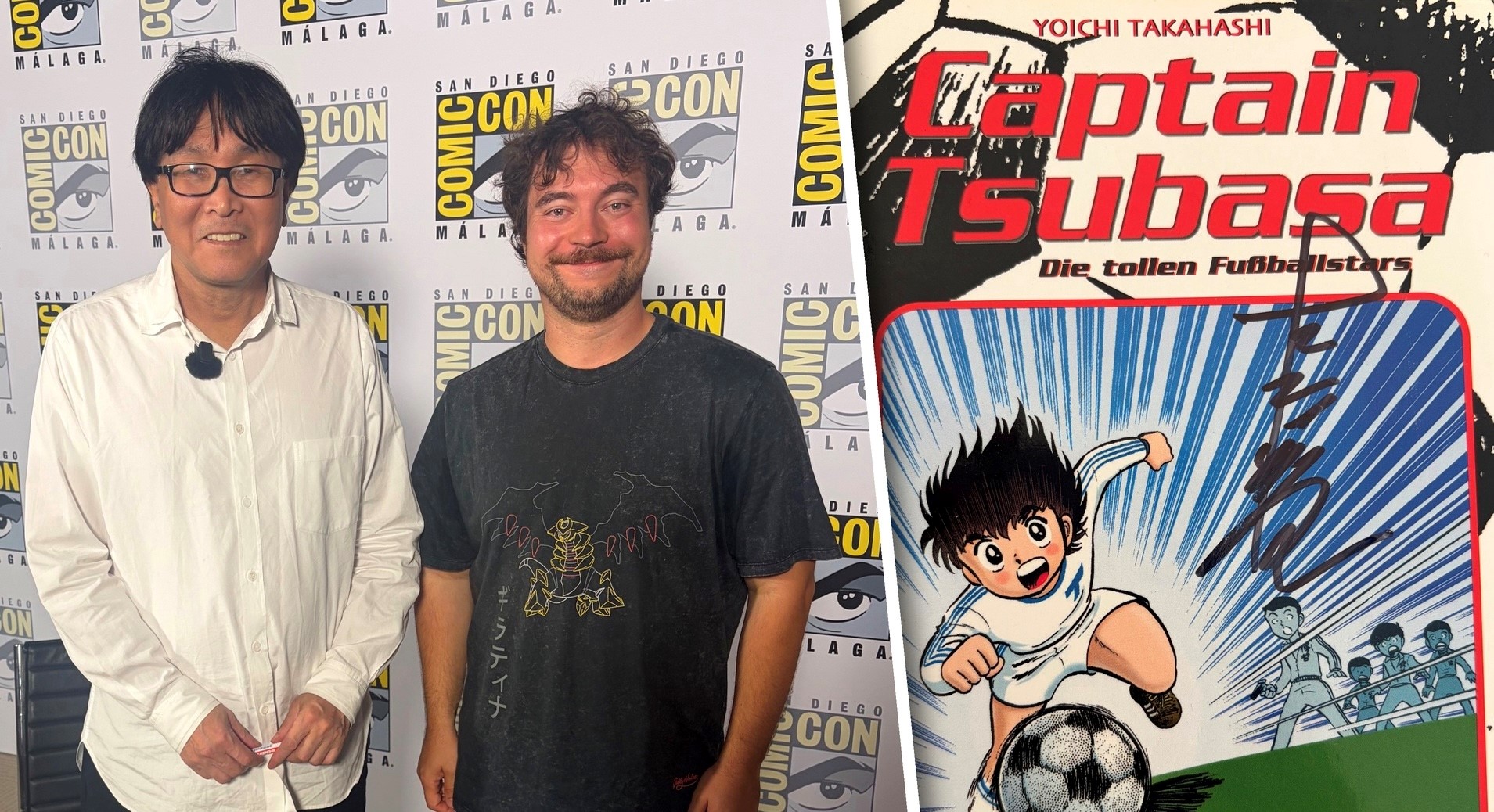
Yoichi Takahashi, the man who taught Japan to love football sat down with us for an interview. He explained why Tsubasa was almost called Taro, why he refused to write a demon coach, and which real-life superstar comes closest to the real thing.
Few manga can claim to have changed a country. Captain Tsubasa can. When Yoichi Takahashi, then a high-school student in Tokyo’s Katsushika ward, watched the 1978 World Cup in Argentina on television, football barely existed in Japan. Three years later, Tsubasa Ozora kicked his first ball in Weekly Shonen Jump, and a generation of kids followed him onto the pitch.
The J-League was founded in 1993. Zidane, Iniesta, Messi and Mbappé have all named a boy with “wings” in his name as the reason they started playing. Forty-five years, more than 80 million copies, several anime adaptations, and one real football club later, the series is still going, now in storyboard form on the Captain Tsubasa WORLD app, with Captain Tsubasa 2: World All-Stars out since August.
Then, this summer, the thing Takahashi had been drawing toward since chapter one actually happened: Japan met Brazil in the round of 32 of the 2026 World Cup.
We caught up with Takahashi at San Diego Comic-Con Málaga to talk about that match, the line that became a proverb, the rivals who outgrew their creator’s plans, and why Tsubasa was never allowed to suffer the way sports-manga heroes were supposed to.
Q: Your first World Cup was Argentina 1978, on television, as a high-school student. This summer Japan actually stood on the pitch against Brazil, the exact matchup you imagined more than forty years ago. Where were you when that game kicked off, and did it feel like watching your own manga come true?
Yoichi Takahashi: Playing Brazil at a World Cup is something special. Tsubasa himself admired Brazilian football above everything else. He turned professional in São Paulo, and Roberto Hongo, his mentor, was a Japanese-Brazilian who had played for the Brazilian national team. So from the moment I started drawing football, Brazil was the target, the team Japan would one day have to measure itself against. Seeing that actually happen at a World Cup made me very happy. We lost, yes, but it was a wonderful match. I’m satisfied.
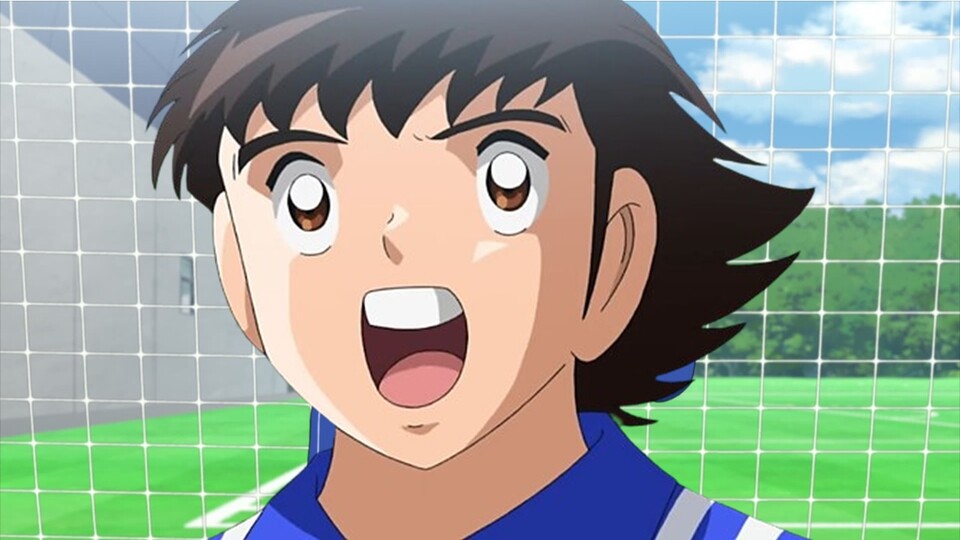
Q: “The ball is my friend” has become almost a proverb in Japan. When you first wrote that line, was it just a boy’s way of thinking, or did you already sense that giving the ball a soul would change how a whole country looked at football?
Yoichi Takahashi: I never set out to create a famous line. It came out naturally. When Tsubasa is very small, Roberto teaches him a little football, and the idea is that if you are always together with the ball, you will get better. Always being with the ball, I thought, is the same as being friends with it. The words simply grew out of that.
Q: Tsubasa Ozora, “wings” and “great sky.” Did the name come before the character, or the character before the name? And did he almost have a different name?
Yoichi Takahashi: At first he was going to be Tsubasa Taro. “Tsubasa” was decided from the beginning; “Ozora” was added afterwards. The wings came first.
Q: Sports stories today are full of geniuses, monsters, and egos. Blue Lock is the obvious example. Tsubasa is something rarer: a hero who is simply happy. Was that optimism a deliberate choice, and is it harder to write today than it was in 1981?
Yoichi Takahashi: When I started, the dominant genre in Japan was what we called supokon, “sports guts” manga: brutal training, a demon coach, and a hero who endures everything and becomes strong through suffering. My idea was the opposite. Sport is supposed to be fun. Kicking a ball is fun, kicking a ball with your friends is fun, and that is why you play. I wanted to remove the feeling of being forced, of being made to do it, and show a boy who plays joyful football because he chooses to. That was the starting point of everything.
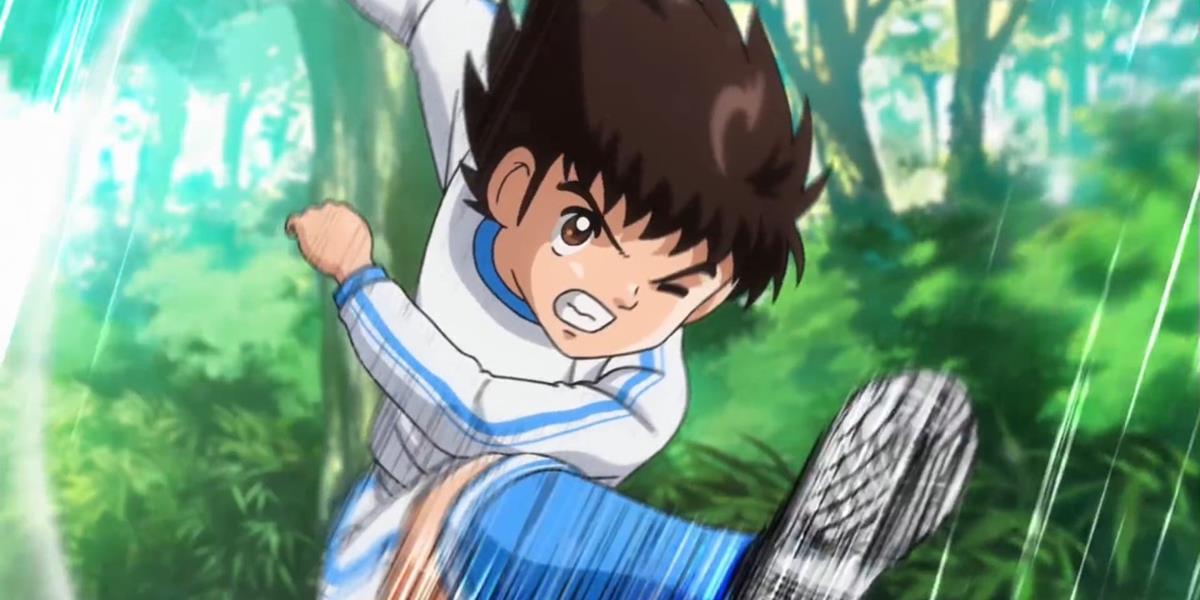
Q: Your rivals are unforgettable: Hyuga the tiger, Wakabayashi the keeper who guards the goal like a gate. Do you think of them as opposites of Tsubasa, or as the same dream told in a different voice?
Yoichi Takahashi: When I was working out how to make Tsubasa’s story interesting, the first idea was Wakabayashi: a goalkeeper against a field player, the simple drama of whether the goal goes in or not. Hyuga came later, and he was built as Tsubasa’s exact opposite. Tsubasa’s family is comfortable; Hyuga’s is poor, and he delivers newspapers to keep playing. Tsubasa is bright and open; Hyuga is fierce. I reversed everything, because I knew that if you throw characters like that against each other, the matches get better and the story gets better. All the rivals were created that way, by asking what kind of opponent would make Tsubasa’s story more exciting. But something happened along the way. The more exaggerated they became, the more readers recognized them as personalities in their own right. Wakabayashi and Hyuga grew until they stood on the same level as Tsubasa himself.
Q: You now run Nankatsu SC, a real club named after a fictional school. Has anything happened on that real pitch that you would never have dared to draw, because readers wouldn’t have believed it?
Yoichi Takahashi: I keep the two things quite separate in my head. When I watch the real Nankatsu SC, I’m not usually thinking about the manga. But it is still a club that appears in my work, and there have been moments when a player scored with an overhead kick, and for a second the two worlds connected. A player like Tsubasa, scoring a goal like Tsubasa, in the real world. Those moments stay with you.
Q: Away from football for a moment: is there a current manga or anime you’re following as a fan right now, something that made you think, “I wish I had drawn that”?
Yoichi Takahashi: Honestly, I don’t read much manga these days. So there isn’t a particular series I’m following at the moment.
Q: Zidane, Messi, Iniesta, Mbappé: they’ve all said they grew up on Captain Tsubasa. Has any of them ever tried to convince you that he’s the real Tsubasa? And who actually is?
Yoichi Takahashi: (laughs) Messi, probably.
Copyright: ©Yoichi Takahashi/SHUEISHA


Join the discussion
Comments are linked to your Anime Corner account and published after moderation.
Sign in to comment
Use your Anime Corner Portal account across all Anime Corner services.