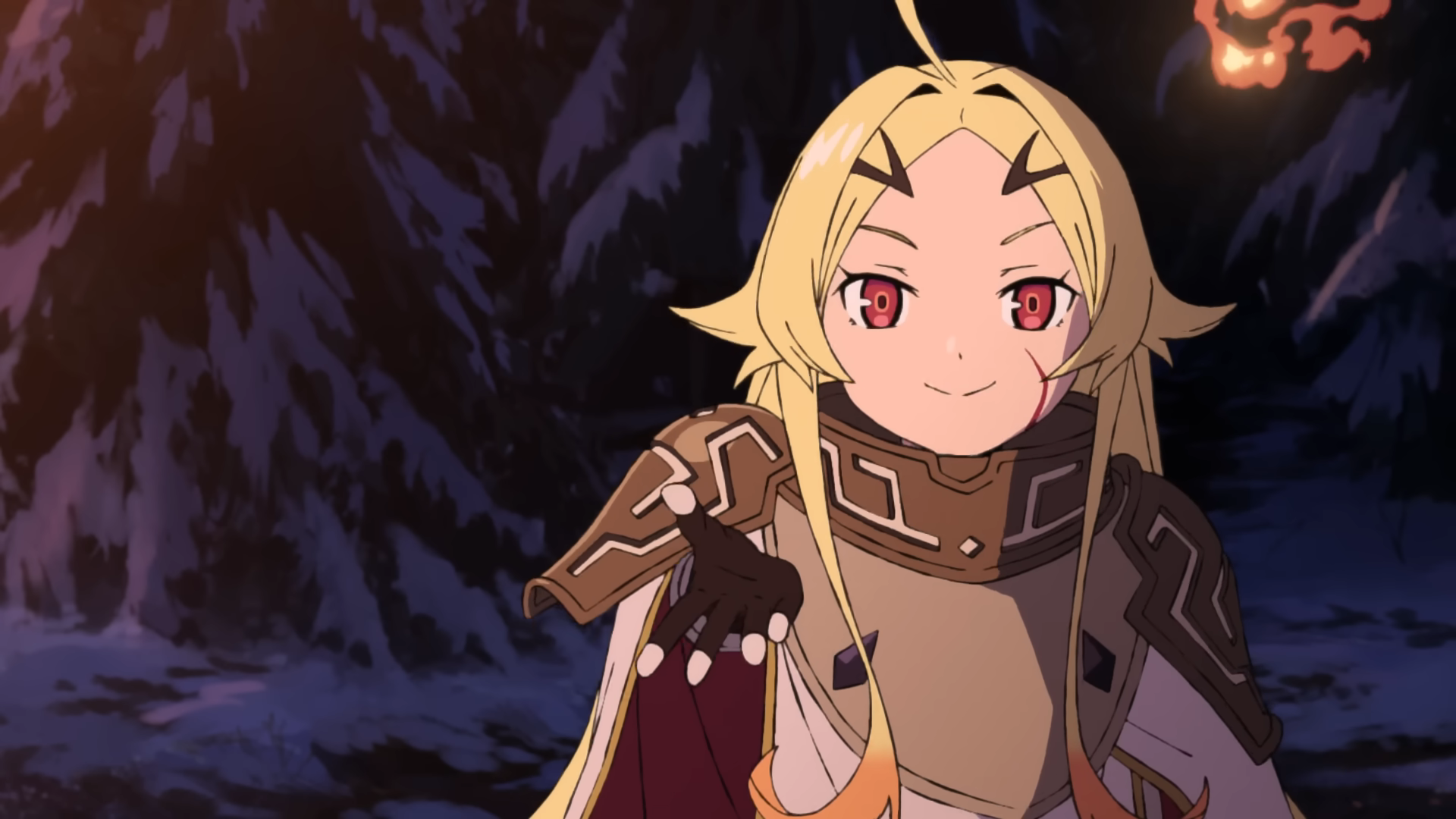
Sentenced to Be a Hero is a light novel series and anime that flips the notion of heroism entirely on its head. Written by Rocket Shokai and illustrated by Mephisto, the story follows Xylo Forbartz, a convicted killer sentenced to serve in Penal Hero Unit 9004 in a world where being a “hero” is a punishment instead of a role to aspire to. Criminals are forced to fight, not even able to escape their fate through death. The anime adaptation of the light novel premiered in January 2026 with a cinematic one-hour special episode to start off its first season. A second season was announced at AnimeJapan 2026 in March, and Crunchyroll will stream it.
Rocket Shokai, Mephisto, Yohei Azakami (the Japanese voice of Xylo Forbartz), and Mayu Iizuka (the Japanese voice of Teoritta) were guests at New York Comic Con 2026, where Anime Corner had the chance to speak with them about the series. The conversation covers the series’ premise, how the characters change between the light novel and the anime, and the performances behind Xylo and Teoritta.
Portions of this interview have been lightly edited for clarity. This interview was conducted with the assistance of an interpreter.
Q: Rocket Shokai-sensei, the series depends on the premise that being a “hero” can be a punishment. The series also makes a point of asking complicated questions like “who deserves punishment?” and what it means to be a hero. When you first developed the hero system for the series, did you already have firm answers to these questions? Did the answers change as the story continued?
Rocket Shokai: There was absolutely no change in the premise since the beginning in terms of direction and philosophy. In terms of justice, most of us act justly because of ego and because of some benefit that we want derived from the act that is just. But in terms of what is in our story, it’s purely driven as a punishment. So the goodness, the act of being good, is driven not by the self, but as an act of punishment. And that premise has not changed since the beginning.
Q: The way characters appear to an audience changes when they move from a novel to animation. Were there ever any scenes where the voice acting performance or animation of a scene led to a significant reinterpretation of a character by the collective staff?
Mephisto: Everything in the animation is a little bit bigger, with more scale, more impact. Even the number of enemies, there’s more than what was originally in my mind. So everything about the series is magnified by the animation and the movement that’s allowed by the animation.
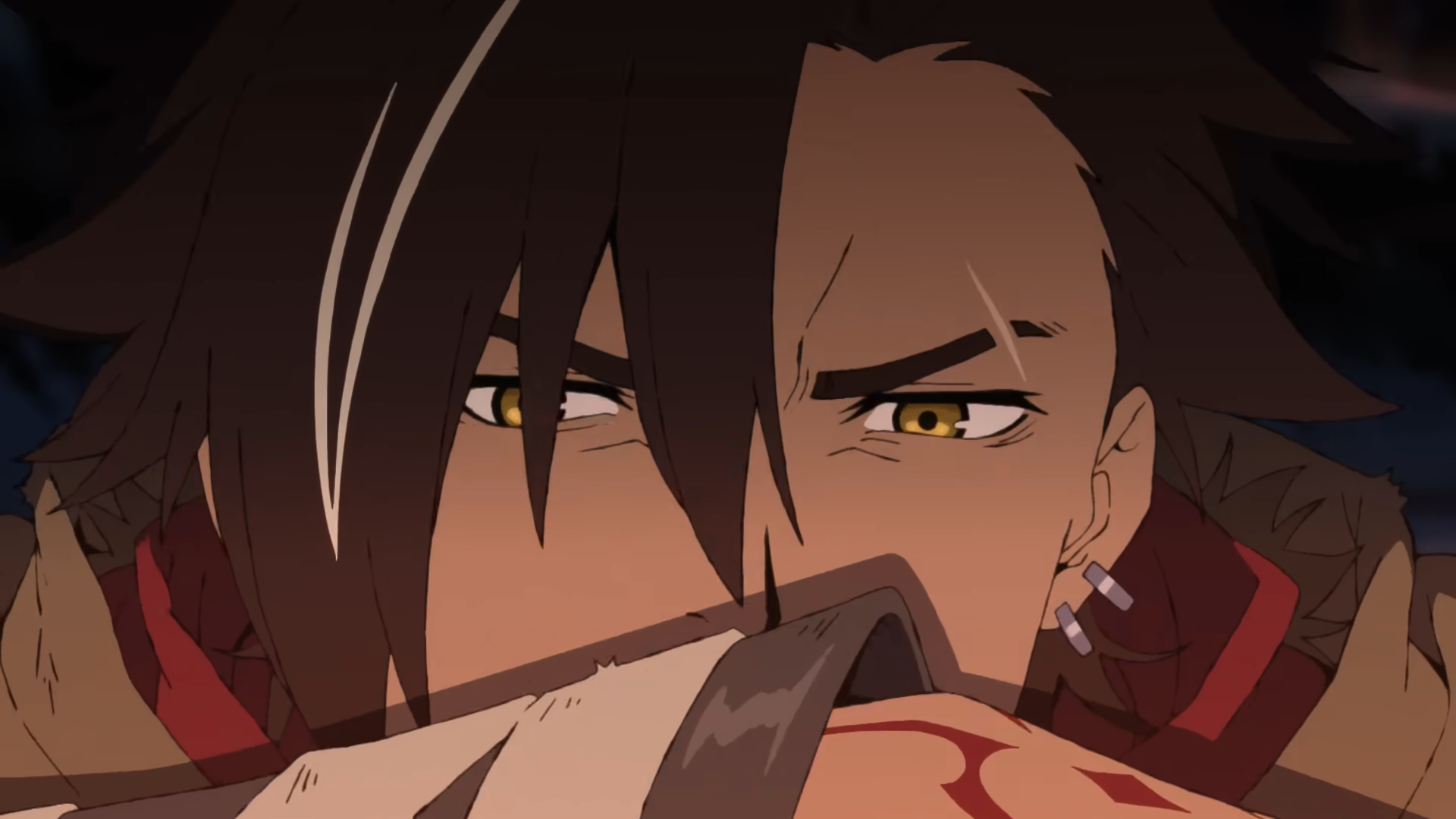
Rocket Shokai: Adding voice to the characters really lets me see them in a more third-person perspective. And although I’m the creator of these characters, I am amazed by how strange and unique and lovable all of these characters are. For example, Xylo was always angry. Teoritta is always very assertive. And there’s so many more ways that I had subtly added that get magnified. With the voices and them coming to life, it’s a really enjoyable process seeing the evolution of these characters magnified into another third-person perspective.
Yohei Azakami: The novel is told in a character perspective, it’s the point of view from one of the characters, whereas the animation is really from a third-person global perspective. And so the animation tells the story as it is, almost like a historical event from no single perspective, whereas the novel gives you insight of what was a living perspective of that moment. And so together you really get the full effect of an enriched world.
Mayu Iizuka: When reading novel stories, it really allows for the reader’s creativity to get integrated. But that’s really the creativity of one person, that reader. So if you were to make it an example, it’s like one or two colors. And it’s within the confines of one’s imagination. But by turning it into animation, there’s a team working on this, and so many people’s perspectives and thoughts coming into it. And so it really does become the product of so many layers and so many discoveries. And that’s really what makes it interesting.
Q: Azakami-san, you’ve spoken in the past about not wanting Xylo to always come across as a super cool dark hero. How do you decide when to make him heroic, when to make him cool, and when to make him sound decidedly human? Or neither of those things?
Yohei Azakami: I think you heard that Rocket Shokai-sensei likes hard-boiled novels. There’s an element that is cool, but not trying to be cool. You can’t try to be cool and be cool. There’s an element of making the mundane, the everyday, be cool. And so how do we build in that natural, unforced nuance and make it work so that it’s not overdone, it’s subtle, and yet it’s decidedly human and cool.
Q: Iizuka-san, Teoritta and Xylo have a lot of different elements to their relationship. It can feel familial, instrumental, or like something else entirely. Is there a specific label you mentally attach to the relationship when you perform, or do you intentionally avoid doing that?
Mayu Iizuka: What’s important to me is to not define the relationship too rigidly. Of course, I come into this with knowledge and bias, but I really let that go in giving Teoritta her life because it has to be free and it has to be unexpected to be real. And so I allow that freedom and that release so that something unexpected can be built into the voice of the character. Sometimes in the text that unexpected element comes in and sometimes in the recording another unexpected element comes in.
Q: Mephisto-sensei, can you talk about how you’ve incorporated artistic choices in the anime back into the source material? What is that idea exchange like for you?
Mephisto: Building out as animation allows for movement, and giving each character little habits. Little things they do with their hands. Subtle motions that build into who the character is that cannot be added in a single illustration. It also helped to really build out the world and the design — for example the weapons. What you see in the animation with the weapons definitely became inspiration that was incorporated back into the illustration. The collaboration and the interaction between the animator team has been pure joy and something that is going to continue as the content grows.
Q: Rocket Shokai-sensei, Sentenced to Be a Hero constantly makes moral comparisons between penal heroes and the irresponsible institutions that control them. Are there any moral decisions or stances made by either of these groups that drew inspiration from a real-life event or institution?
Rocket Shokai: Not so much present-day events, but I’m a big fan of historical fiction and I’ve definitely used history as an inspiration. And, in particular, not so much war stories, but natural disasters and human reactions to natural disasters.
Q: Rocket Shokai-sensei, what was behind the decision to incorporate more human traits and the desire for affection in the goddesses’ characters?
Rocket Shokai: These things are not necessarily an intent from the beginning, but if you drill down to the details, what makes them survive were things like being lovable, wanting to be accepted. So that desire for acceptance, desire for love helped the goddesses remain relevant and survive. It’s not so much an intended design, but when you drill down to the details of how these goddesses have survived this long, what was at the root was their ability to relate, to be lovable, and to be accepted.
Q: The anime makes changes in the way the characters’ relationship progresses compared to the novel. Do those changes make you see or think about those two characters in a different way than you would have without seeing the anime?
Rocket Shokai: So, one of the things that’s very different between the original novel and the animation series is the speed at which Teoritta and Xylo form a bond. In the novel, this happened relatively quickly and they moved on, but in the animation, it took six episodes for them to connect, and that allowed for Xylo’s perspective to be a stronger story of revenge, and the catharsis that happens at episode 6 when they finally form that bond made for a stronger moment in the animation.
We’d like to thank Rocket Shokai, Mephisto, Yohei Azakami, and Mayu Iizuka for taking the time to speak with us during New York Comic Con 2026. You can stream Sentenced to Be a Hero on Crunchyroll.
©2024 Rocket Shokai/KADOKAWA/Project Sentenced to Be a Hero


Join the discussion
Comments are linked to your Anime Corner account and published after moderation.
Sign in to comment
Use your Anime Corner Portal account across all Anime Corner services.